Bale Mountains and Omo Valley 11 Days
Overview
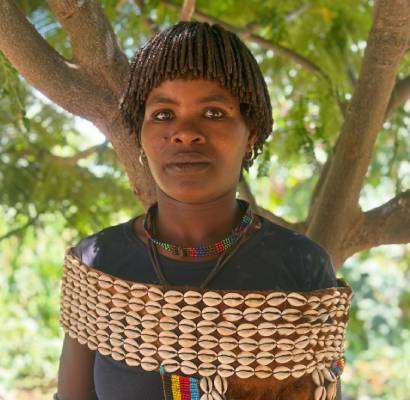
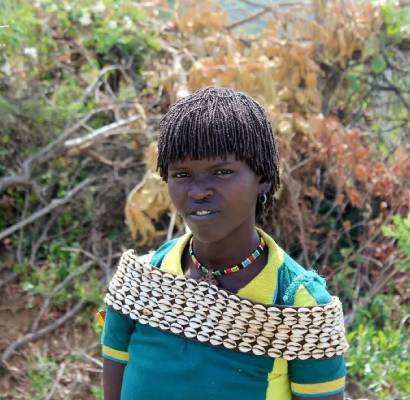
Ethiopia’s most important biodiversity hotspot, Bale Mountains National Park UNESCO world heritage sites supports a rich mosaic of high-altitude habitats including lush evergreen forest, stands of giant bamboo, pastel-shaded moorland, and sheltered river valleys swathed in fragrant juniper-hagenia woodland. The park is the most important stronghold to three endemic large mammal species – the charismatic Ethiopian wolf, handsome mountain nyala, and delightful Bale monkey – while its incredible avifauna is reflected by the African Birding Club having listed it as one of the continent’s top five birding hotspots. South Omo Valley a vast semi-arid region flanking the lower Omo River before it flows across the border into Kenya’s Lake Turkana – is home to some of the continent’s most staunchly traditional animist ethnic groups. In many respects, this remote region comes across as a kind of living museum, supporting around two dozen different tribes, some numbering tens of thousands, others a few hundred. Several of the tribes place great cultural emphasis on body ornamentation – ranging from the large clay lip plates worn by the Mursi women, to the more widespread customs of ritual scarification, body painting and henna-dyed hair.
Highlights
Itinerary
Price included
Price not included
Reviews
Highlights
- Explore the diverse ecosystems of the Bale Mountains.
- Witness the rare and endangered Ethiopian wolf in its natural habitat.
- Enjoy breathtaking views of the Ethiopian highlands.
- Encounter the diverse tribes of the Omo Valley.
- Experience the daily life of the Hamer, Mursi, Karo, and other indigenous communities.
- Learn about their fascinating cultures.
- Witness the vibrant and colorful weekly markets.
Itinerary
Day 1: Addis Ababa
Arrival Bole International Airport and transfer to your hotel.
Overnight: Addis Ababa, Hotel.
Day 2: Addis Ababa
After breakfast you will start your city tour of Addis Ababa with the National Museum of Ethiopia. This is one of the best museums in quality and diversity of the exhibits. Archeological exhibits include the 3.2 million-year-old fossil of Lucy (or Dinkinesh – ‘thou art wonderful’- in the native language), a hominoid woman of the specious of Australopithecus Afarensis. The discovery of Lucy’s fossil in 1974 forced a complete rethink of human genealogy, providing that our ancestors were walking 2.5 million years earlier than had been supposed.
Overnight: Addis Ababa, Hotel.
Day 3: Addis Ababa – Goba (Bale Mountains NP)
Morning driving from Addis to the Bale Mountains National Park. Arrive at the park headquarters in the afternoon. Meet with guides and drive to the Gaysey Grasslands. Take a leisurely afternoon hike, possibly spotting two endemic mammals that frequent the area: Menelik’s Bushbuck and the Mountain Nyala. Birds in this area include the Blue-Winged Goose, the Spot-Breasted Lapwing, the Abyssinian Long Claw, the Wattled Ibis, the Black-Headed Siskin, Rouget’s Rail, and numerous other species. Then drive to Goba.
Overnight: Goba, Wabi Shebelle Hotel.
Day 4: Excursion to Sanetti
Today you will have an excursion to Sanetti Plateau, the highest plateau in Africa. Here you may encounter the endemics of Ethiopia Wolf. Visit and proceed to Harrena Forest, the second dense forest in Ethiopia.
Overnight: Goba, Wabi Shebelle Hotel.
Day 5: Goba – Arbaminch
On this day after breakfast drive to Arbaminch.
Overnight: Arbaminch, Paradise Lodge.
Day 6: Arbaminch
In the morning, we will have a boat cruise on Lake Chamo to see some of the biggest African crocodiles. Hippopotamuses and many beautiful aquatic birds including the lovely Kingfisher and African Fish Eagle are also easily seen. In the afternoon, visit the Dorze village. The Dorzes are famed for their amazing weaving mastery. Weaving, producing local liquors, music, and false banana food (kocho) production are some of the unique traits of the Dorze people. Dorze people live on hills and they are famous for their huge huts, resembling a giant beehive.
Overnight: Arbaminch, Paradise Lodge.
Day 7: Arbaminch – Turmi
In the morning after breakfast drive to Turmi via the villages of Konso, home to the Konso people, designated as a UNESCO World Heritage site. A highland people, the Konso are known for the ancient and intricate terraces that encircle their well-planned villages. Each Konso village begins on a hill top. As the population grows a new “ring” of homes are built around the hilltop. When the final “ring” reaches near the bottom of the hill, a new village on a different hill must be built. Look for the “generation pole” located in each village. Every 18 years and new pole is added to the others making it easy to calculate the age of the village. After having lunch in Konso, proceed to Turmi, home of the Hamer tribe. In the evening, you might be lucky to see the traditional night dancing of the Hamer people, known as evangadi, if there will be a wedding ceremony. If there is no the opportunity to see and participate the Hamer tribe wedding ceremony visit the Hamer village.
Overnight: Turmi, Evangadi Lodge.
Day 8: Turmi
In the morning we drive to another Omo Valley Tribes known as Nyangatom then after visiting the villages of those tribes we will drive to another village to visit the Karo Tribes which is lying on the river side of Omo later we will be driving to the town of Turmi for overnight.
Overnight: Turmi, Evangadi Lodge.
Day 9: Turmi – Jinka
After breakfast drive to Jinka, via Dimeka and Key Afar. Tuesdays and Saturdays are market days in Dimeka, which are among of the most colorful markets in the area. In this market you can find tribes such as Tsemai, Benna, Hamer, Karo and Ari. Afterwards, continue to Jinka.
Overnight: Jinka, Nasa Hotel.
Day 10: Jinka
In early morning drive to in the village of Bodi tribe. The Bodi tribe has a unique tradition of body modification where they practice scarification. The process involves making small cuts on the body and then rubbing ash into the wounds, which leaves permanent scars. The scars are believed to represent beauty and are seen as a sign of strength and endurance. Men on the other hand, are very plump, with big bellies. The fatter a man is, the more attractive he is to women. After a visit drive to the village of Mursi. The Mursi are Known for their lip plate tradition; an unmarried woman’s lower lip will be pierced and then progressively stretched over the period of a year. A clay disc indented like a pulley wheel is squeezed into the hole in the lip.
Overnight: Jinka, Nasa Hotel.
Day 11: Jinka – Addis Ababa (flight)
On this day after breakfast we take the morning flight back to Addis Ababa. We should be in the airport before one and half hours for check in. After we arrive in Addis Ababa having a relaxing lunch and take you to a visit of the Ethnographic Museum. The Ethnological Museum, Addis Ababa, in Ethiopia, is a public institution dedicated to ethnology and culture. The Ethnological Museum houses anthropological, musicological and cultural objects. The Ethnological Museum is the first university museum in Ethiopia. In the evening a farewell dinner at one of the best traditional restaurant in Addis to see different types of cultural music and dance with a traditional Ethiopian foods.
Overnight: Addis Ababa, Hotel or Departure.
Price included
- Meal (BLD)
- Car with fuel
- Driver allowance
- Accommodation for sharing (twin bed)
- Boat
- Local guide fee all destinations
- Entrance fee in the parks
- Sightseeing entrance
- Scout fee
- Bottle of water everyday
- Service fee
Price not included
- Domestic flight
- Tip
- Alcoholic Beverages
- Photo and Videography fee in the villages
- Personal expenses like laundry
- Any expenses which is not stated in the including lists
Reviews