Visit Ethiopia – Sador Ethiopia Tours

Addis Ababa and It’s Surrounding

Addis Ababa and It's Surrounding

2000 Habesha Cultural Restaurant

2000 Habesha Cultural Restaurant Home 2000 Habesha Cultural Restaurant Habesha 2000 Cultural Restaurant is one of Addis Ababa’s most iconic venues for experiencing Ethiopian culture, cuisine, and hospitality. Established in 2000, this restaurant has become a must-visit for tourists and locals alike, offering a vibrant immersion into Ethiopia’s traditions. Here’s what makes it special: Situated in the bustling Bole area (near the airport), it’s easily accessible for travelers. The restaurant features traditional Ethiopian aesthetics—woven mesob (basket tables), thatched roofs, colorful murals, and handicrafts. Dim lighting and rustic wooden accents create a warm, authentic atmosphere. Habesha 2000 excels in serving Ethiopian cuisine with generous portions and bold flavors: Injera Platters, Try doro wat (spicy chicken stew), tibs (grilled meat), kitfo (minced beef seasoned with spices), and gomen (collard greens). Vegetarian options like misir wat (lentil stew) and aterkik alicha (split pea stew) are also crowd favorites. Don’t miss the traditional Ethiopian coffee ritual, complete with roasting beans, incense, and three rounds of aromatic coffee (abol, tona, baraka). Sip tej (honey wine) or local beers like Meta beer or St. George beer to complement the meal. The restaurant comes alive with live music and dance shows starting around 7:30 PM: Musicians play the krar (lyre), masinko (single-string fiddle), and kebero (drums), accompanied by soulful vocalists. Performers showcase energetic traditional dances like eskista (shoulder-shimmying), gurage (fast-paced footwork), and Oromo styles. Audience participation is encouraged—be ready to join the fun! Ready to Travel With Real Adventure Check Availability
Addis Ababa and It's Surrounding

Yod Abyssinya Cultural Restaurant

Yod Abyssinya Cultural Restaurant Home Yod Abyssinya Cultural Restaurant Yod Abyssinya Cultural Restaurant** stands as a celebrated emblem of Ethiopia’s vibrant heritage, artfully blending culinary excellence with immersive cultural storytelling. Nestled in the heart of Addis Ababa, this iconic establishment transports visitors into the soul of Abyssinia—Ethiopia’s ancient name—through its rich ambiance, adorned with traditional handwoven textiles, rustic wooden furnishings, and vivid murals depicting historical narratives. The restaurant’s name, Yod Abyssinya, evokes a sense of timeless connection, with “Yod” symbolizing the Amharic word for “star,” reflecting its guiding role in showcasing Ethiopian culture. At its core is the cuisine: guests savor authentic dishes like doro wat (spicy chicken stew), kitfo (minced beef delicacy), and tangy injera, the spongy flatbread that anchors communal dining. Meals are shared atop woven mesob baskets, fostering camaraderie and echoing Ethiopia’s tradition of togetherness. Complementing the feast are live performances of eskista dances, soulful Azmari folk music, and the aromatic coffee ceremony, an ancient ritual celebrating Ethiopia’s status as the birthplace of coffee. Every element is curated to offer an immersive journey into the nation’s customs, flavors, and artistic legacy. As a cultural ambassador, Yod Abyssinya bridges continents, enchanting both global travelers and locals. It has garnered acclaim in international guides and media, drawing diplomats, celebrities, and culture enthusiasts eager to experience Ethiopia’s essence. Beyond its doors, the restaurant champions community by hosting festivals, artisan markets, and workshops, empowering local musicians and craftsmen. Its commitment to authenticity—from sourcing indigenous ingredients to staff adorned in traditional * habesha kemis attire—cements its role as a guardian of heritage. By transforming dining into an educational and sensory celebration, Yod Abyssinya not only preserves Ethiopia’s identity but also fosters global appreciation, making it a luminous beacon of cultural diplomacy and a must-visit destination for anyone seeking the heart of Abyssinia. Ready to Travel With Real Adventure Check Availability

Addis Ababa and It's Surrounding

Ethnographic Museum

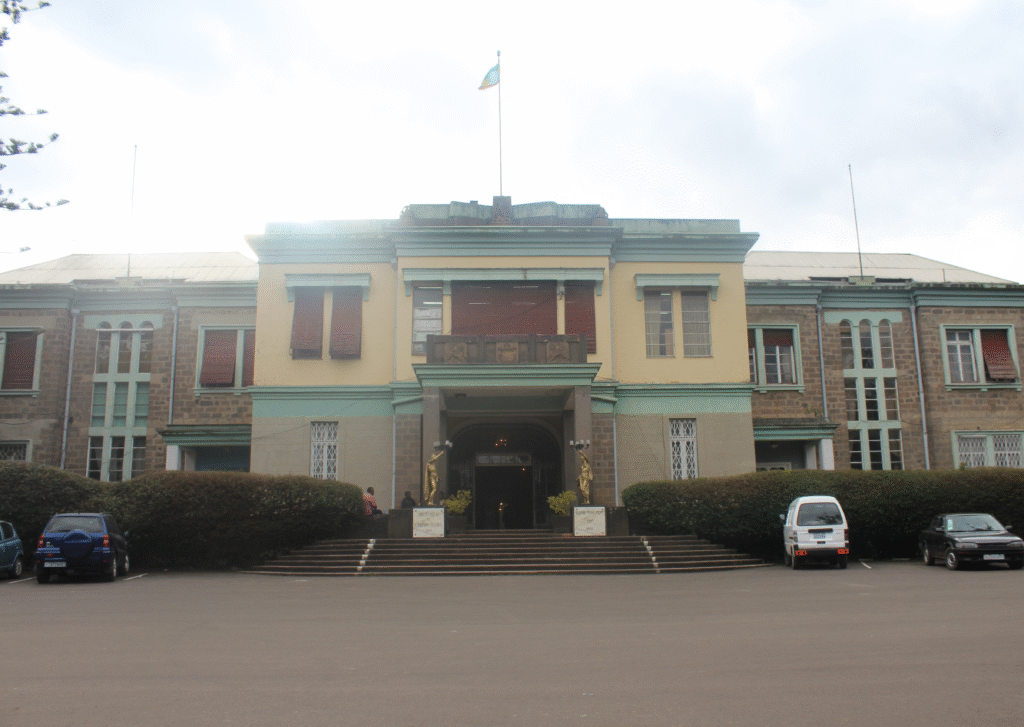
Ethnographic Museum Home Ethnographic Museum The institute of Ethiopian Studies was established in 1963 with three major components: a research and publication unit, a library and museum. The aim of the Institute is to collect, document, analyse and disseminate knowledge about languages, cultures and history of Ethiopia. As Ethiopia is a cradle of mankind, a cross road of cultures and civilizations, it is known as “museum of nationalities.” This Museum, therefore, is shouldering a great responsibility of capturing the heritage of the past and the present for posterity. The main focus of the museum is traditional art material culture of nationalities. The IES Museum brings the many diverse ethnic groups of Ethiopia under one roof. The layout follows the story of life from birth to death, and beyond, and how the different stages of life are viewed and experienced by different ethnic groups in Ethiopia. Fortunately the museum is found in the Old Palace, Guenete Le’ul, of the late Emperor Haile Selassie I. the building welcomes all visitors with dignity and grace. The museum is accommodated on the first and second floors; comprising the bedroom of the late Emperor Haile Selassie and ethnographic section on the first floor and the art gallery on the second floor. The bedroom of the Emperor reminds that the building was once a palace in the formative period of modern Ethiopia. It is the first modern palace imitating European style. Visitors can see here the bed, which Haile Selassie I used for more than ten years and some personal gifts to the late Emperor. The reception hall hosts now ethnographic items of more than eighty language groups. It is divided into two parts. The first part introduces the general socio-economic conditions of the country. It displays production tools and some techniques of craftsmen. The second part provides a quick visit through Ethiopia. Here, some assorted items from each administrative region are represented. Although the space is not large enough to show the beauty and diversity of the material culture of the country, it creates a strong urge to know more about the country. The second floor is a gallery where the ‘high art’ of the country is displayed. The exhibit concentrates on the history of sacred and a few examples of the secular art of Ethiopia. The time depth of some items could go as far back as the fourteenth century. Ready to Travel With Real Adventure Check Availability

Addis Ababa and It's Surrounding

Zoma Contemporary Art Center (ZCAC)

Zoma Contemporary Art Center (ZCAC) Home Zoma Contemporary Art Center (ZCAC) Zoma Contemporary Art Center (ZCAC): The Art Center is an environmentally conscious artist-in-residency project with locations in Addis Abeba and Harla, a historic village near Dire Dawa. The focus of ZCAC’s work is the promotion of multidisciplinary contemporary art, international exchange between artists and the conception and implementation of sustainable, innovative and environmentally conscious art projects. ZCAC is very active in hosting educational events in partnership with the Addis Abeba University’s School of Fine Arts and internationally renowned artists such as David Hammons from New York and Ernesto Novelo from Mexico. Ready to Travel With Real Adventure Check Availability

Addis Ababa and It's Surrounding

Addis Ababa Museum

Addis Ababa Museum Home Addis Ababa Museum Addis Ababa Museum was established in October 1986 on the occasion of the centennial anniversary of the foundation of Addis Ababa as the capital city. The objectives of its establishment were to collect and display the heritage that depict the development of the city since its foundation; to record the future progress of the Capital in the social, political and economic spheres; and to assist researchers in their study about Addis Ababa. The Museum is housed in one of the first and the oldest buildings of the City. The house belonged to one of the warlords during the reign of Emperor Menelik II. The fine quality of the building and the unique architectural style is impressive and gives the visitors double satisfactions. The Museum has eight sections each department exhibits materials of significance at different stages of the development of the city. At Finfine Hall, for example, photographs that depict the progress of the city are exhibited. And at Adwa Hall, weapons used during the Battle of Adwa are displayed. Ready to Travel With Real Adventure Check Availability

Addis Ababa and It's Surrounding

National Museum of Ethiopia

National Museum of Ethiopia Home National Museum of Ethiopia The Museum Exhibition Hall has four different exhibition sections. Temporary exhibitions are also organized often by using selected objects from the museum storage based on certain themes and in collaboration with other institutions and private exhibitors as well as regional museums in the old building. Lectures and documentary film shows are also presented regularly to visitors of the museum. The museum displays the most significant discoveries of stone tools, and fossil evidences of hominid species among which a 3.2 million years old fossil nick named LUCY or Denkinesh. Ardi aged about 4.4 million years, Selam which was indicated as the earliest child (baby girl) aged about 3.33 million years can be mentioned. Some of the most famous hominid and other animal fossils found from the Rift Valley and Other Major archaeological sites / Hadar, Middle Awash, Omo basin, Melka Kunture … etc./ dating back to millions of years are displayed in this section. These discoveries attest to the presence of sophisticated way of life of our ancestors in this part of the world. Here, visitors will appreciate the knowhow and sophistication it required to produce and use diverse stone implements. The pre historic part of the museum has rich collection of stone artifacts dealing with human origins. Ready to Travel With Real Adventure Check Availability

Addis Ababa and It's Surrounding

Lion of Judah

Lion of Judah Home Lion of Judah The proud Lion of Judah – symbol of Emperor Haile Selassie I and once represented on the national flag – stands atop this monument, which boasts a turbulent but triumphant history. Erected in 1930, it was carted off to Rome in 1935 by Italian occupiers, not to be returned for 30 years, when it again faced the threat of removal under the Dergue regime in 1974. The statue remains, however, as a symbol of Ethiopia’s heroism and resistance. Ready to Travel With Real Adventure Check Availability

Addis Ababa and It's Surrounding

Emperor Menelik

Emperor Menelik Home Emperor Menelik It is erected on the square of Emperor Menelik near St George Church and it is a standing testimony of the famous Battle of Adwa in 1896 where Africa triumphed over European colonialism. The statue of Emperor Menelik is one of the monuments erected many years after the foundation of Addis Ababa as a capital of the country. A German architect Hartel Spengler carved it from bronze in Germany at the order of Queen Zawditu the daughter of Emperor Menelik II for the memory of her father. The statue symbolizes the anti-colonial struggle of Emperor Menelik who waged the Battle of Adwa heading the Ethiopian warriors and conquered the white army in the land of the black continent. The statue symbolizes Emperor Menelik in his coronation robe riding gloriously on Dagnew, his horse, and two spears on his hand. As it is shown on the statue Dagnew being out of natural size and raising both the fore-legs, looks to the north where the Battle of Adwa took place and victory was for Ethiopians. At the time when the statue of Menelik was arrived in Ethiopia from Germany and its place of erection had been arranged, Queen Zawditu died accidentally in 1930.   Ready to Travel With Real Adventure Check Availability

Addis Ababa and It's Surrounding

Victory Monument

Victory Monument Home Victory Monument This monument is located on the intersection of Adwa, Queen Elisabeth and Development through Cooperation Avenues at Arat Kilo, and commemorates the Victory of the Ethiopians over the Fascist Italians in 1941 as well as those gallant Ethiopians who were perished resisting the invading Fascist forces during 1936-1941 war. The official name of the square where the monument located is Miazia 27, i.e., the day of the Liberation of the country and the arrival of the Emperor together with his patriotic troops in Addis Ababa. Emperor Haile Selassie I inaugurated the Freedom Monument in 1944. As can be seen, the 15-meter monument symbolizing the obelisks of Axum is supported by pillars and has six entrances. The entire history of the five years struggle is narrated by writings carved on the stone tablets round the monument. On the western entrance is read the discourse of Emperor Haile Selassie I at the time of arrival and the day of liberation in 1941. Ready to Travel With Real Adventure Check Availability

Addis Ababa and It's Surrounding

Yekatit 12

Yekatit 12 Home Yekatit 12 The Yekatit 12 monument is a memorial in Addis Ababa commemorating the Yekatit 12 pogrom, an Italian war crime in Ethiopia. The pogrom took place from 19 to 21 February 1937 and is known as Yekatit 12 after the start date in the Ethiopian calendar. The memorial is an obelisk in the centre of the roundabout of Sidist Kilo Square (Amharic “Six Kilometers”), also called “Yekatit 12 Square”. The monument is a 28 m (92 ft) tall [2] white stone obelisk. It was inaugurated on 2 November 1944 by the Ethiopian Emperor Haile Selassie. Since 1955, two reliefs, made of bronze, have been installed in the lower part, each running around the obelisk. The sculptural groups by the Yugoslav sculptors Antun Augustinčić and Frano Kršinić depict scenes of the pogrom and other war crimes such as the use of chemical weapons and the burial of victims after the liberation of the country. Above this, on one side, is a frieze of the Lion of Judah, the symbol of Emperor Haile Selassie and of Ethiopia until 1991. When the Ethiopian military junta came to power in 1974, it removed all lion symbols of the emperor in the country, except on this monument. The obelisk stands on a raised base, to which six steps lead from three directions. Ready to Travel With Real Adventure Check Availability

Scroll to Top