Visit Ethiopia – Sador Ethiopia Tours

Events and Festivals

Events and Festivals

Ashenda Festival

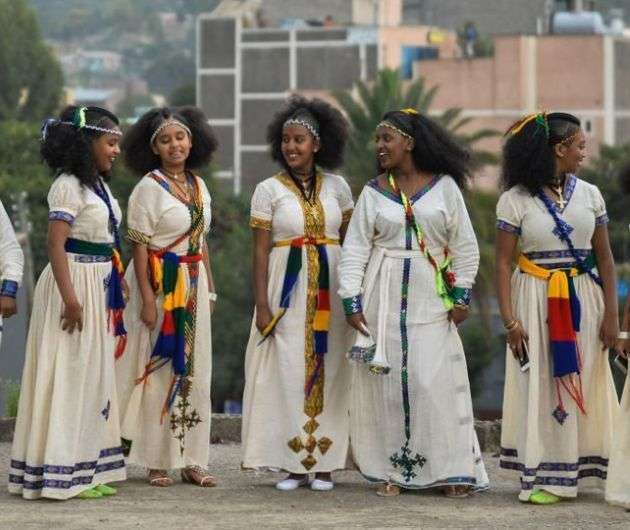
Ashenda Festival Home Ashenda Ashenda/Ashendye is a unique Northern Ethiopia traditional festival which takes place in August to mark the ending of fasting called Filseta. This event is mostly for girls and young women, which they await very eagerly every year. The name of the festival “Ashenda” comes from the name of a tall grass that the girls make in to a skirt and ware it around their waist as a decoration. The young women and girls dress the best traditional dresses called Tilfie which is a cotton dress decorated with amazing embroidery from the neck to toe in front of the dress. The girls also adorned themselves with array of beautiful jewelry. After they gather in the village or city center they divide in to small groups and they go house to house singing and playing their drums. They stop at ever house and sing and dance for the people in the houses. It is customary for people to give them money, food and drinks and other items for their efforts. Be a part of this vibrating and intriguing festival in all parts of Tigray and the northern part of the Amhara region. Ready to Travel With Real Adventure Check Availability

Events and Festivals

Fiche Chembelala

Fiche Chembelala Home Fiche Chembelala The Sidama nation has its own New Year celebration which will be celebrated for two weeks colorfully every year. The holiday is known by the name of Fiche. The Fiche day will be clearly identified through the Ayantos (the traditional astrologists). The Ayantos will spot the day in advance through observing the stars and notify to the clan leaders. Fiche is the most celebrated Sidama cultural holiday, representing the Sidama New Year. The Fiche is based on the lunar system. Sidama elders (astrologists) observe the movement of the stars in the sky and decide the date for the New Year and the Fichche celebration. The Sidama New Year is therefore is unique in that it does not have a fixed date. It rotates every year following the movements of the stars. Sidama has 13 months in a year. And each of the months is divided equally into 28 days while the 13th month has 29 days. This is because the Sidama week has only 4 days and hence each month has 7 weeks instead of the conventional 4 weeks. The names of the 4 days in Sidama week are called: Dikko, Deela, Qawadoo and Qawalanka to be followed by Dikko completing the cycle of a 4-day week Ready to Travel With Real Adventure Check Availability

Events and Festivals

Islamic festivals

Islamic Festivals Home Islamic Festivals Islamic festivals have a special meaning for Muslims of Ethiopia because of the historical link. Ramadan is one of the holiest periods in the Islamic calendar. Life changes dramatically during Ramadan. After breaking their fast at sun-down, people stay awake until early hours feasting, visiting friends, and praying. At dawn they eat the meal that will last them until sun set. At the end of Romadan, the festival of ld-Ul-Fitir is celebrated. Other Islamic festivals are:Milad-an -Nabi(birth day of Prophet Mohamed) and Eid Ul-Adha(end of Hajji, the pilgrimage to Makkah).   Ready to Travel With Real Adventure Check Availability

Events and Festivals

Ashenda

Ashenda Home Ashenda Ashenda/Ashendye is a unique Northern Ethiopia traditional festival which takes place in August to mark the ending of fasting called Filseta. This event is mostly for girls and young women, which they await very eagerly every year. The name of the festival “Ashenda” comes from the name of a tall grass that the girls make in to a skirt and ware it around their waist as a decoration. The young women and girls dress the best traditional dresses called Tilfie which is a cotton dress decorated with amazing embroidery from the neck to toe in front of the dress. The girls also adorned themselves with array of beautiful jewelry. After they gather in the village or city center they divide in to small groups and they go house to house singing and playing their drums. They stop at ever house and sing and dance for the people in the houses. It is customary for people to give them money, food and drinks and other items for their efforts. Be a part of this vibrating and intriguing festival in all parts of Tigray and the northern part of the Amhara region. Ready to Travel With Real Adventure Check Availability

Events and Festivals

Timket, Ethiopian Epiphany

Timket, Ethiopian Epiphany Timket, Ethiopian Epiphany Ethiopia boasts of many cultural assets that are unique in many aspects. One example is Timket or Ethiopian Epiphany which is celebrated on January 19, every year. The Timket festival traces its origin back to the baptizing of Jesus Christ in the Jordan river by John the Baptist. The Ethiopian Orthodox Church celebrates Timket every year to commemorate the day. Unlike other churches throughout the world, the church celebrates the day colorfully. The Celebration begins actually a day before Epiphany which lies on January 19. On January 18, the Tabot (a replica of the Arc of the Covenant which is believed to have resided in Axum Tsion Church) will be taken out from each church and a procession of the faithful follows it to the nearby river or a place where a sizable amount of water is found. The day is called “Ketera”. The word ketera is originated from the Amharic word “meketer” or to contain water. In many of the districts in rural Ethiopia, there are small rivers where the Timket ceremony is held. As the time of the festival is dry season, water is not available in big amount. So the faithful build a very small dyke to contain the water so that there will be enough amount of water contained for the priests to baptize the faithful who gather on the site from several districts. The presence of the tabot is important to the ceremony as the Ethiopian Orthodox Church does not conduct any religious ceremony without it. On the day of Timket, a prolonged mass will be held and after that the priests will baptize the believers. Later on, each of the faithful will accompany the tabots back to their respective churches. Ready to Travel With Real Adventure Check Availability

Events and Festivals

Christmas

Christmas Christmas Ethiopian Christmas is celebrated in different ways across many countries, but the elements that make it a unique celebration are very peculiar in Ethiopia. Christmas in Ethiopia, known as Genna, is a time for attending church for devout Christians, feasting on a sumptuous selection of Ethiopian dishes, and playing Yegenna chewata, a form of traditional hockey. It is also celebrated on 7 January, instead of 25 December, as Ethiopia follows the Coptic calendar which has 13, months, 12 of which are of 30 days each and the 13th month at the end of the 5 or 6 days depending whether the year is a leap year or not. Church ceremonies have always formed the heart of traditional Christmas celebrations. These take place in ancient churches carved from solid volcanic rock and also in modern churches that are designed in three concentric circles. Men and boys sit separately from girls and women. Also the choir sings from the outside circle. Before the celebrations on Christmas Day, devout Orthodox Christians fast. This fasting period, known as Yegenna Tsom, is traditionally commemorated by not eating dairy products such as meat, milk, and cheese for 40 days before Christmas. In its strictest application, followers are also expected not to eat food between dawn and dusk and generally devote their time to prayer at home and regular visits to church. Even for those who elect not to fast for the entire 40 days, Christmas Eve plays an important part in the connection with their faith. They are expected to fast strictly before Christmas Day and spend the night of Christmas Eve at church in prayer and solace. Genna in churches usually starts in the evening of Christmas Eve. People receive candles as they enter the church or bring their own. After lighting the candles everyone walks around the church three times, then stands throughout the mass, which may last up to three hours. For those unable to attend the Genna Eve mass, early morning mass starts as early as 4 am. At dawn on the morning of Genna, people get dressed in white. Most people wear a traditional garment called a shemma. It’s a thin white cotton piece of cloth with brightly coloured stripes across the ends and worn like a toga. But it is also common to see people wearing normal western-style clothing to church especially in major cities including the capital Addis Ababa. Ready to Travel With Real Adventure Check Availability

Events and Festivals

Meskel

Meskel Home Meskel Meskel is celebrated by dancing, feasting and lighting a massive bonfire known in Ethiopian tradition as “Damera”. Meskel commemorates the finding of the True Cross in the fourth century when Empress Helena, mother of Constantine the Great, discovered the True Cross on which Christ was crucified. The feast is celebrated in Ethiopia on September 17 Ethiopian calendar (September 27 Gregorian calendar), 6 months after the discovery of the True Cross. The celebration of Meskel signifies the presence of the True Cross at mountain of Gishen Mariam monastery and also symbolizes the events carried out by Empress Helena. According to tradition, Empress Helena lit incense and prayed for assistance to guide her. The smoke drifted towards the direction of the buried cross. She dug and found three crosses; one of them was the True Cross used to crucify Jesus Christ. Empress Helena then gave a piece of the True Cross to all churches, including the Ethiopian Church. This piece was then brought to Ethiopia. According to the Ethiopian legend, when people get close to the piece of the True Cross it made them naked by its powerful light. Because of this, a decision was made to bury it at the mountain of Gishen Mariam monastery in Wollo region. The monastery of Gishen Mariam holds a volume of a book which records the story of the True Cross of Christ and how it was acquired. The focus of the celebration is a huge bonfire topped with an image of a cross to which flowers are tied. Priests in full ceremonial dress bless the bonfire before it is lit. This festival coincides with the mass blooming of the golden Yellow Maskal Daisies, called Adey Ababa in Amharic; symbolically heralding the advent of a new year after the rainy season is over. Ready to Travel With Real Adventure Check Availability

Scroll to Top